the point is
the point is
meeting needs

Presbyopia causes and treatments

While it’s the most common cause of vision impairment, its impact on daily life is often underestimated. Millions of people experience frustration due to difficulty performing close-up tasks, such as reading small print or using digital devices.1,2

Presbyopia: a natural, inevitable part of the aging process3

Presbyopia affects 128 million people in the US
128 Million
Presbyopia  is caused by the natural reduction of lens elasticity and diminished focusing power.2,4,5
It impacts nearly 128 million people in the U.S. and typically begins as early as age 40.2,6

It affects the eye’s ability to change shape and focus on close objects, making close-up vision tasks more difficult.2

Presbyopia  is caused by the natural reduction of lens elasticity and diminished focusing power.2,4,5

128 Million
It impacts nearly 128 million people in the U.S. and typically begins as early as age 40.2,6
Presbyopia affects 128 million people in the US

It affects the eye’s ability to change shape and focus on close objects, making close-up vision tasks more difficult.2

Normal eye function

Clear near-vision results from the eye’s ability to adjust focus as objects move closer or farther away. This adjustment results from7,8:
  • The lens changing shape to increase focusing power (driven by the ciliary muscle)
  • The pupil changing size to control light and sharpen focus (through balance of the iris sphincter and dilator muscles)
Together, these actions help the eye adapt to different distances and lighting conditions.
Up close human eye

The impact of presbyopia

With age, the eye lens becomes less flexible. This limits its ability to accommodate, leading to blurred near vision. Consequences of limited accommodation ability include3,5:
  • Difficulty focusing on close-up tasks
  • Difficulty adapting to different levels of ambient illumination (particularly in dim or low-contrast settings), which can make presbyopia symptoms more noticeable and disruptive
These changes cause people with presbyopia to struggle with everyday tasks like reading price tags, checking a phone, or adjusting between indoor and outdoor light.
Common glasses that people with presbyopia use

Current presbyopia treatments may not address real-life needs

Modern lifestyles demand more convenient presbyopia correction options without daily disruption9,10:
  • Glasses and contact lenses don’t address underlying physiological changes in the natural lens and ciliary muscle4,5,11
  • Current topical miotics improve near vision but may not balance efficacy with
    tolerability
    12
  • With some miotics, the eye’s inability to maintain natural balance between iris sphincter contraction and dilator relaxation impairs optimal pupil size across varied lighting conditions8,12
Tenpoint branded circle
Tenpoint Therapeutics is focused on solving daily challenges of presbyopia through patient-centered innovation.

We’re prioritizing:

Functional near vision

to address real-world needs

Woman with presbyopia reading a dinner menu

As we better understand presbyopia, there’s a growing need for solutions that improve daily near-vision tasks and offer the potential to9:

  • Improve ease of reading in work and social settings
  • Fit seamlessly into active, social, and professional lifestyles
Woman with presbyopia reading a dinner menu

Duration of effectto meet the most demanding part of the day

Woman with presbyopia and her partner looking at a computer screen

For patients with presbyopia struggling with blurry near vision, everyday tasks become challenging. These patients are looking for a solution that9:

  • Is reliable, convenient, and doesn’t interrupt their day
  • Has a manageable dosing routine
Woman with presbyopia and her partner looking at a computer screen

Tolerability profile to maintain long-term use

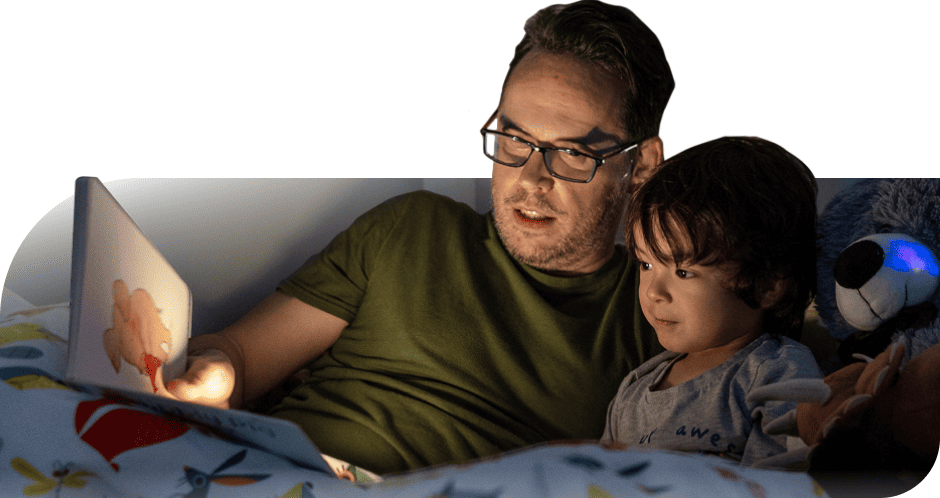
Father reading a bedtime story to his child under dim light

Patients with presbyopia are seeking near-vision improvement options that9:

  • Allow them to go about their daily activities without interference
  • Are manageable for use over a long period of time
Father reading a bedtime story to his child under dim light
the point is
the point is
References: 1. World Health Organization. Blindness and vision impairment. Updated August 10, 2023. Accessed January 14, 2026. https://www.who.int/news-room/fact-sheets/detail/blindness-and-visual-impairment  2. Katz JA, Karpecki PM, Dorca A, et al. Presbyopia—a review of current treatment options and emerging therapies. Clin Ophthalmol. 2021;15:2167-2178. 3. Mancil GL, Baily IL, Brookman KE, et al. Optometric clinical practice guideline: care of the patient with
presbyopia
. American Optometric Association; 2011. 4. Glasser A, Campbell MC. Biometric, optical and physical changes in the isolated human crystalline lens with age in relation to presbyopia. Vision Res. 1999;39(11):1991-2015. 5. Heys KR, Cram SL, Truscott RJW. Massive increase in the stiffness of the human lens nucleus with age: the basis for presbyopia? Mol Vis. 2004;10:956-963. Accessed January 15, 2026. http://www.molvis.org/molvis/v10/a114 6. American Optometric Association Health Policy Institute. New Approaches to Presbyopia. 2023. 7. Zuo H, Cheng H, Lin M, et al. The effect of aging on the ciliary muscle and its potential relationship with presbyopia: a literature review. PeerJ. 2024;12:e18437. 8. Mathôt S. Pupillometry: psychology, physiology, and function. J Cogn. 2018;1(1):16. 9. Lang JR, Garlich J, Kaiser Maharjan E. The science of formulation: advancing presbyopia treatment through optimized design. Optometry Times. March 13, 2025. Accessed January 15, 2026. https://www.optometrytimes.com/view/the-science-of-formulation-advancing-presbyopia-treatment-through-optimized-design 10. Brujic M, Kruger P, Todd J, et al. Living with presbyopia: experiences from a virtual roundtable dialogue among impacted individuals and healthcare professionals. BMC Ophthalmol. 2022;22:204. 11. National Eye Institute. Eyeglasses for refractive errors. National Institutes of Health; updated July 8, 2019. Accessed January 15, 2026. https://www.nei.nih.gov/eye-health-information/eye-conditions-and-diseases/refractive-errors/eyeglasses-refractive-errors 12. De Gracia P, Pucker AD. Pharmacological modulation of pupil size in presbyopia: optical modeling and clinical implications. J Clin Med. 2025;14(17):6040.

Tenpoint branded circle

You are now leaving tenpointtherapeutics.com.
Are you sure you want to continue?