the point is
the point is
innovation

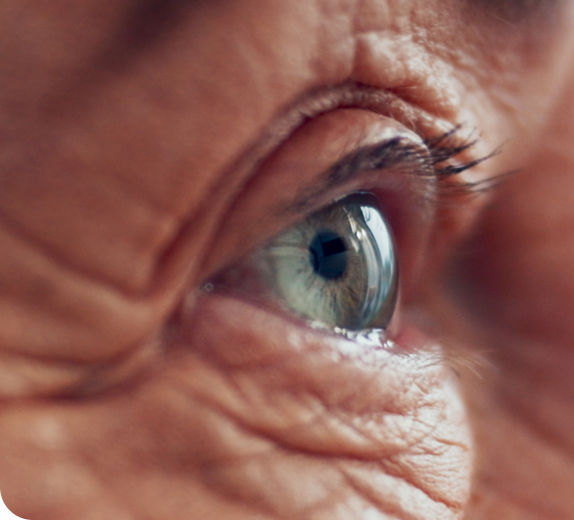
Innovation for aging eyes

Tenpoint Therapeutics is advancing innovative therapies for common
age-related eye diseases, including presbyopia, cataracts, and geographic atrophy (GA).

Lab scientist looking into a microscope

Our investigational treatments include:

Eye drop into eye

A dual-agent eye drop for presbyopia

Syringe injecting medicine into eye

A small-molecule injectable for cataracts

Cells regenerating

A regenerative cell replacement therapy for geographic atrophy

Tenpoint Therapeutics partners with eye care professionals to create innovative therapies designed to improve or restore vision and support long-term eye health.

Tenpoint Therapeutics Pipeline

PROGRAM DISEASE OPPORTUNITY SOLUTION PHASE KEY MILESTONES
YUVEZZI™ (carbachol and brimonidine tartrate ophthalmic solution) 2.75% / 0.1%* Presbyopia Treatment for age-related
near-vision loss
A multi-modal combination eye drop (carbachol and brimonidine tartrate) designed to produce a pinhole effect that may help sharpen near vision FDA-approved
Phase III
  • US FDA approval
    01/28/26
  • Plans to expand into additional markets
TPT-161 Presbyopia/ Cataract Being investigated to disrupt the Dysfunctional Lens Syndrome (DLS) continuum with a nonsurgical, natural lens health approach A multi-targeted NCE that may treat and reverse lens protein aggregation and restores lens flexibility and clarity Preclinical bar
Preclinical
TPT-005 Geographic atrophy Being investigated to restore vision where cells do not naturally regenerate Investigational subretinal cell therapy that may restore vision in people that are affected by geographic atrophy Preclinical bar
Preclinical
YUVEZZI™
(carbachol and brimonidine tartrate ophthalmic solution) 2.75% / 0.1%*
DISEASE
Presbyopia
OPPORTUNITY
Treatment for
age-related near-vision loss
SOLUTION
A multi-modal combination eye drop (carbachol and brimonidine tartrate) designed to produce a pinhole effect that may help sharpen near vision
PHASE
Phase III
KEY MILESTONES
  • US FDA approval
    01/28/26
  • Plans to expand into additional markets
DISEASE
Presbyopia/ Cataract
OPPORTUNITY
Being investigated to disrupt the Dysfunctional Lens Syndrome (DLS) continuum with a nonsurgical, natural lens health approach
SOLUTION
A multi-targeted NCE that may treat and reverse lens protein aggregation and restores lens flexibility and clarity
PHASE
Preclinical
DISEASE
Geographic atrophy
OPPORTUNITY
Being investigated to restore vision where cells do not naturally regenerate
SOLUTION
Investigational subretinal cell therapy that may restore vision in people that are affected by geographic atrophy
PHASE
Preclinical
*In clinical trials known as Brimochol PF.

NCE=new chemical entity; NDA=New Drug Application.

Eye drop into eye

Presbyopia

YUVEZZI:
Investigational dual-agent eye drop for presbyopia

YUVEZZI combines two active ingredients into one pupil-modulating eye drop.1,2

These two ingredients may help reduce pupil size, sharpen near vision, and minimize side effects by limiting peripheral light.1-4

  • Clinical programs included over 800 patients aged 45-80, across 58 U.S. sites1,4
  • Completed two pivotal Phase 3 trials (BRIO-I and BRIO-II)1,4
  • BRIMOCHOL is not currently approved in any market.
lady with mobile
Tenpoint branded circle

BRIMOCHOL PF mechanism of action

Presbyopia drops work through two key mechanisms: constricting the pupil to extend depth of focus and engaging the ciliary muscle to support accommodation and regulate pupil size.5

Carbachol is a potent, long-lasting miotic agent that constricts the pupil, while brimonidine tartrate is an alpha-2 adrenergic agonist that inhibits the iris dilator muscle and prevents pupil dilation, offering the potential of5:

  • Reduced side effects: Brimonidine tartrate lessens ciliary muscle contraction and prevents pharmacologically induced pupil dilation (mydriasis) by activating alpha-2 adrenergic receptors1,3
  • Enhanced efficacy: Brimonidine tartrate improves carbachol’s bioavailability and sustains the pinhole effect to improve near vision and comfort over a longer period1,2,5
  • Balance of optics, maintaining the sphincter–dilator relationship for optimized pupil size across lighting conditions2,3,5
the point is
the point is
Syringe injecting medicine into eye

Cataracts

A multi-targeted approach to treating cataracts

TPT‑161 is an investigational small-molecule therapy designed to delay or prevent cataract surgery.1

It combines an alpha-crystallin chaperone with a reducing agent to:
  • Address lens hardening and clouding (opacification)
  • Support lens function restoration in aging eyes
Close-up of aging human eye
Tenpoint branded circle

TPT-161 mechanism of action

Alpha-crystallins are proteins that help maintain lens transparency by preventing other proteins from clumping. With age, they destabilize—making them key molecular targets in both presbyopia and cataracts.2–5
  • Alpha-crystallin chaperone: Stabilizes lens proteins and may help reverse lens opacity2–4
  • Reducing agent: Breaks down protein bonds and may help improve lens clarity and lessen blurred vision1,2,5

Understanding cataracts

Over 1.8 billion people experience presbyopia, and hundreds of millions also develop cataracts. These two
conditions are part of dysfunctional lens syndrome (DLS)—a
progressive lens condition that begins with loss of
accommodation and may result in vision loss or blindness.6–8

Cataracts are caused by

  • Lens hardening, a natural aging process that affects both cataracts and presbyopia9,10
  • Misfolded lens proteins and oxidative stress, which increase opacity and lead to glare or blurry vision9,10
Cells regenerating

Geographic atrophy (GA)

A regenerative cell therapy for treating geographic atrophy

TPT‑005 is an investigational allogenic, regenerative cell therapy for GA.11

Delivered via subretinal injection, it aims to replace lost retinal cells and help restore vision in advanced dry age-related macular degeneration (AMD).
  • Contains fully differentiated retinal pigment epithelium (RPE) cells derived from human embryonic stem cells (hESC)
  • Developed as a ready-to-use, off-the-shelf injectable therapy
Tenpoint branded circle

TPT-005 mechanism of action

Geographic atrophy is characterized by irreversible vision loss due to the degeneration of retinal pigment epithelium (RPE) cells and photoreceptors. TPT‑005’s cell-based therapy is designed to restore vision by replacing RPE cells and support photoreceptors.11–13
  • Cell characteristics: Mimics native RPE physiological function and structure, including pigmentation and biomarkers
  • Cell replacement: Subretinal injection allows cells to engraft and form a functional layer that may restore lost RPE function

Understanding geographic atrophy

GA is a late-stage form of dry AMD that causes irreversible damage to the retina and central vision. It’s a leading cause of vision loss in older adults, affecting 5 million people globally and 1 million in the U.S.12,14

GA is caused by

  • The death of RPE cells and photoreceptors, which cannot regenerate naturally12,14
  • Risk factors include age, genetics, and smoking12,14
References: 1. Tenpoint Therapeutics. Data on file. 2. Molnar A, Ma J, Ghosh A, et al. Development of a pharmacological chaperone for α-crystallin and its potential for treating cataracts. Invest Ophthalmol Vis Sci. 2019;60(10):3320–3331.
3. Makley LN, McMenimen KA, DeVree BT, et al. Pharmacological chaperone for α-crystallin partially restores transparency in cataract models. Science. 2015;350(6261):674–677. 4. Heys KR, Cram SL, Truscott RJW. Massive increase in the stiffness of the human lens nucleus with age: the basis for presbyopia? Mol Vis. 2004;10:956–963. Accessed January 15, 2026. http://www.molvis.org/molvis/v10/a114  5. Heys KR, Friedrich MG, Truscott RJW. Presbyopia and heat:
changes associated with aging of the human lens suggest a functional role for the small heat shock protein, α-crystallin, in maintaining lens flexibility. Aging Cell. 2007;6(6):807–815. 6. Fricke TR, Tahhan N, Resnikoff S, et al. Global
prevalence of presbyopia and vision impairment from uncorrected presbyopia: systematic review, meta-analysis, and modelling. Ophthalmology. 2018;125(10):1492–1499. 7. Lin L, Liang Y, Jiang G, Gan Q, Yang T, Liao P, et al. Global,
regional, and national burden of cataract: a comprehensive analysis and projections from 1990 to 2021. PLOS One. 2025;20(6):e0326263. 8. Martínez-Plaza E, Pinilla I, Sánchez-Cano A. Dysfunctional lens syndrome: current concepts
and clinical applications. Diagnostics (Basel). 2022;12(5):1167. 9. Koetting J. Presbyopia and cataracts: dysfunctional lens syndrome. Optometry Times. 2023. Accessed January 14, 2026. https://www.optometrytimes.com/view/presbyopia-and-cataracts-dysfunctional-lens-syndrome  10. de Diego-García L, Gómez-Benlloch A, Pinazo-Durán MD. Pharmacological strategies for cataract management: from molecular targets to clinical translation. Int J Mol Sci. 2025;26(12):5658. 11. Tenpoint Therapeutics. Data on file. 12. Bakri SJ, Gaudana R, Ambati BK. Geographic atrophy: mechanisms of disease and emerging therapies. Am J Ophthalmol. 2023;250:16–28. 13. Li M, Huisingh CE, Messinger JD, et al. Histology of geographic atrophy secondary to age-related macular degeneration: a multilayer approach. Retina. 2018;38(10):1937–1953. 14. American Macular Degeneration Foundation. Geographic atrophy. AMDF; 2025. Accessed January 15, 2026. https://www.macular.org/about-macular-degeneration/geographic-atrophy

Tenpoint branded circle

You are now leaving tenpointtherapeutics.com.
Are you sure you want to continue?